How AI-made work should be made
Execution got cheap. Judgement didn’t.
Building used to be the expensive part, so we decided everything before anyone wrote a line of code. Now I build the options and decide from the real thing, and the deciding is what costs.
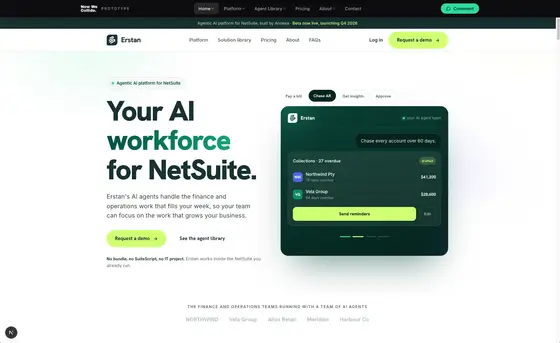
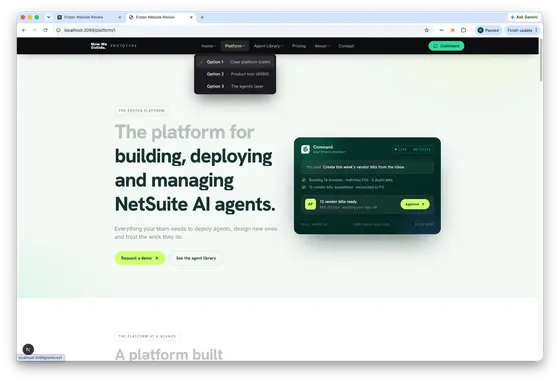
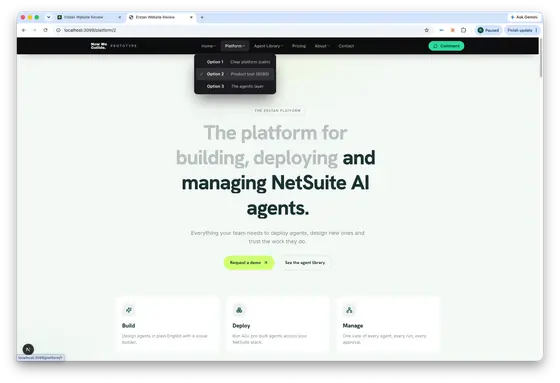
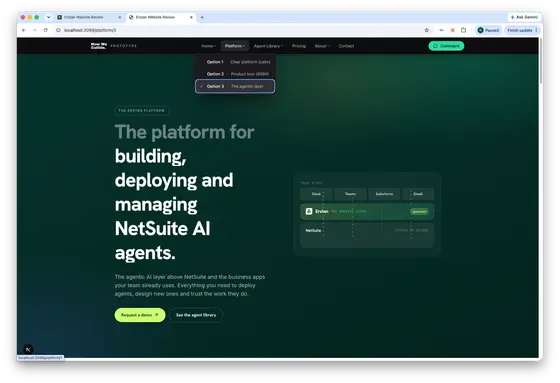
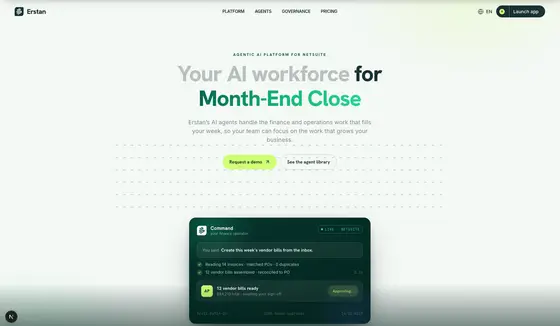
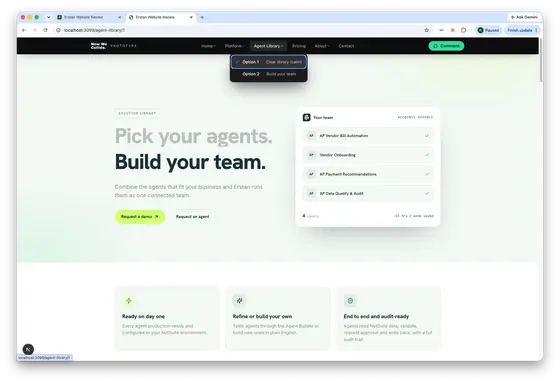
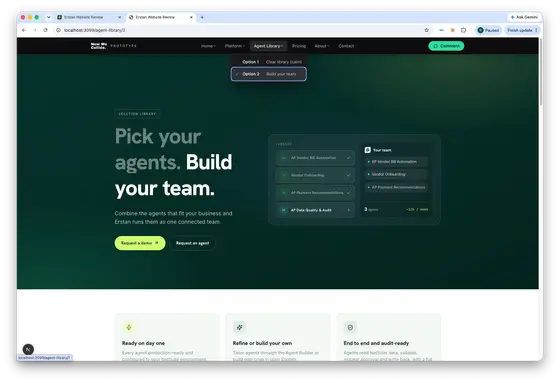
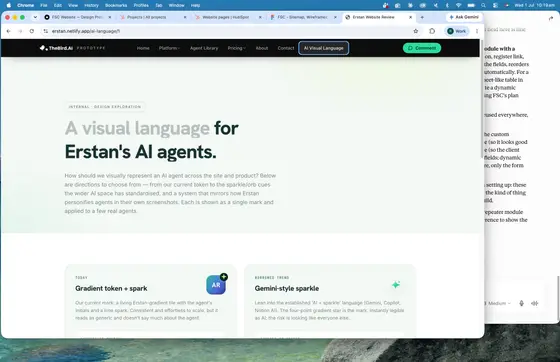
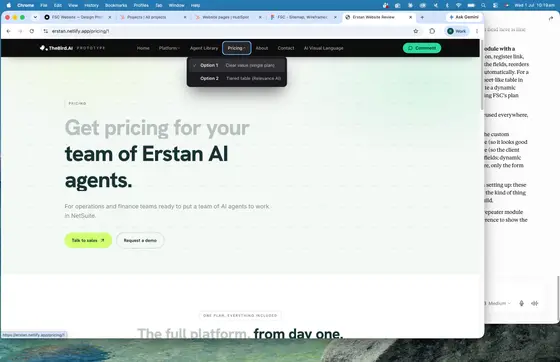
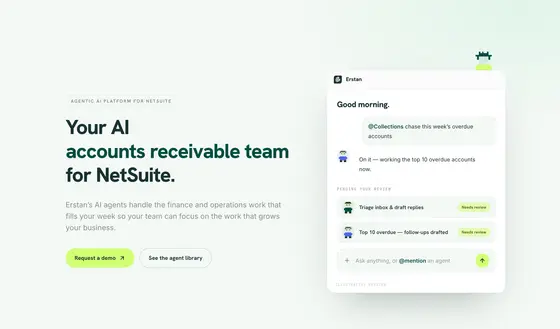
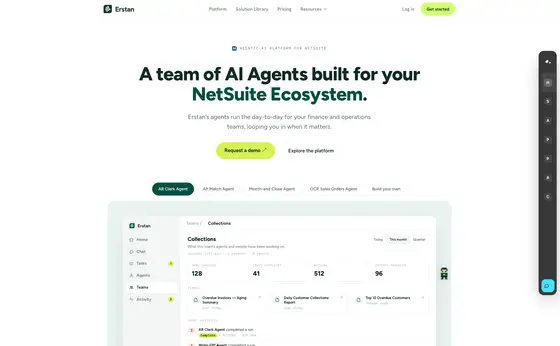
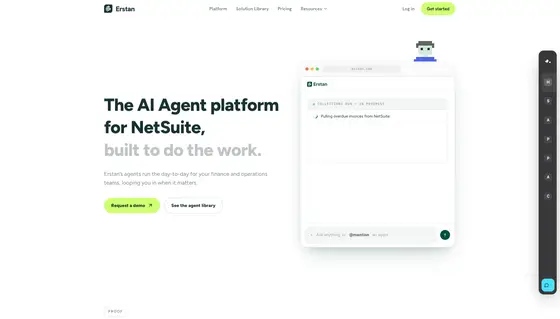
On one client site I built 47 design directions as real, coded pages, then cut them down to the handful that shipped. Twelve are here.
Wireframes and mockups are dead.
They were a workaround for expensive code.
A wireframe is a cheap picture of an expensive thing. That is the only reason it exists. Code used to be too expensive to be your first draft, so you drew a fake page and argued about that instead.
Code is cheap now. Arguing about a picture of a page, when you could be arguing about the page, is just slower.
So I made building cheap.
I industrialised it. A plugin marketplace runs the build: a strong model plans and holds the gates, cheaper models do the typing. It shipped roughly forty pages of a live client site. The interesting part is the two places it isn’t allowed to continue without me.
- plugins
- agents
- skills
- human gates
The main session. Plans the queue, runs the human gates, integrates each part, and makes every shared-file edit itself.
foundations
once per projectEstablishes what the project looks like before anything is built against it.
design-system-extractorOpusproposes
Pulls the design system out of brand material, a live site, or concept imagery. Enumerate everything, invent nothing: every value is provenance-tagged and anything inferred is flagged for approval.
ui-patterns-extractorOpusproposes
Reads the components already built and drafts the patterns doc from them, so new pages match the existing ones rather than only the brand.
foundations-auditorSonnetread-only
Checks a build against its own foundations: rogue values, off-scale spacing, bypassed tokens, doc drift. Conformance, not taste.
the loop
per pageThree moves, over and over: decide what to build, build it, check it. A person closes two of the three.
One unit at a time, before any code exists.
build-plannerOpusproposes
Maps the unit into parts, decides what to build new and what to reuse, and proposes options wherever there's a genuine design choice.
I approve the plan. Not what it looks like, but what gets built, what gets reused, and what's out of scope. A wrong scope wastes the build; a wrong look just means building another one.
Each part in its own git worktree, about three at a time. The orchestrator merges and owns every shared-file edit — that contention rule is what makes running three builders at once safe.
build-implementerSonnetwrites
Builds one approved unit to the signed-off plan. Writes only its own files, never a shared one.
Six passes, each a separate agent, so nothing ever grades its own work. Findings get classified page-layer or shared-layer, and that classification is what decides the next step.
build-verifierHaikuverifies
Build, tests, linters, smoke checks, screenshots. Mechanics, not judgement, on the cheapest model that can do it.
copy-integrity-checkerSonnetread-only
Proves every visible string traces to the real content source. Exists because the loop once wrote plausible copy nobody had approved.
legibility-auditorSonnetread-only
WCAG 2.2 AA on the rendered page, and it classifies each finding page-layer or shared-layer — which is what decides whether the fix is automatic or has to stop for me.
visual-reviewerOpusread-only
Reviews by looking at screenshots rather than the diff, for the breakage code review structurally cannot see.
perf-seo-auditorSonnetread-only
Core Web Vitals and technical SEO, but only when the project's contract marks them in scope. Not every build is a public site.
build-reviewerOpusread-only
A sceptical fresh-eyes audit of code, structure and conventions before anything reaches me.
I approve the result. A page-layer fix the loop can apply itself; anything touching the type scale, a token or the design system stops here, because a shared fix changes every page at once and that is a decision, not a repair.
port
lastMoves the approved build into a CMS the client can maintain themselves.
port-plannerOpusproposes
Plans the port: one module per section, the field shape for each, and which repeating content becomes a database table instead.
module-porterSonnetwrites
Ports one section into one CMS module, lifting its CSS unchanged. Its own folder only.
hubdb-porterSonnetwrites
Ports one repeating section into a table plus a dynamic template, so a page exists per row.
port-verifierHaikuverifies
Checks the ported modules against the local mirror, then live in a browser. Never runs a production upload or a publish.
None of these are mockups.
47 real, coded, working pages on a live client site. Built, not drawn. Then cut down, mixed, and cut down again.
Two quick probes, built before any copy existed, purely to read the client's taste. They picked the less tech-forward one.
11 frames
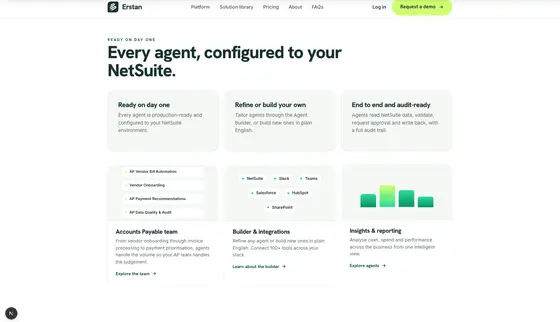
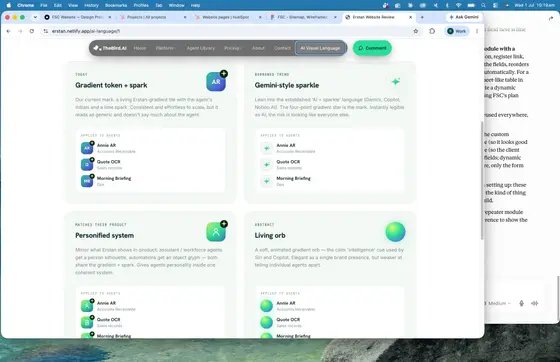
The build loop. For every section with a real choice in it, it proposed four or more directions, then built the best three as whole pages. The labels on the frames are that spectrum: CALM is the on-system pick, DISTINCT is deliberately the furthest from it, WILD is allowed to lose. An alternative that's nearly the same as the recommendation is a fake choice.
10 frames · 3 carried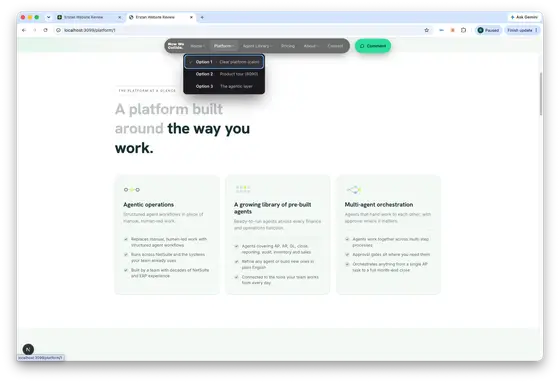
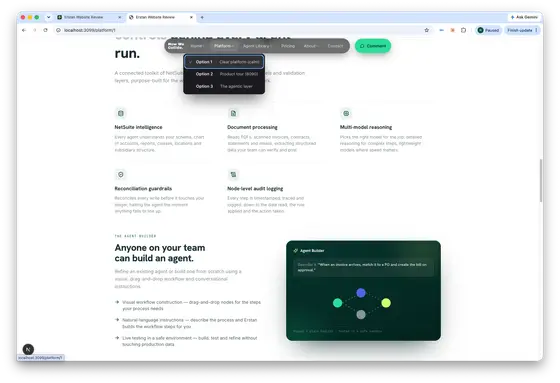
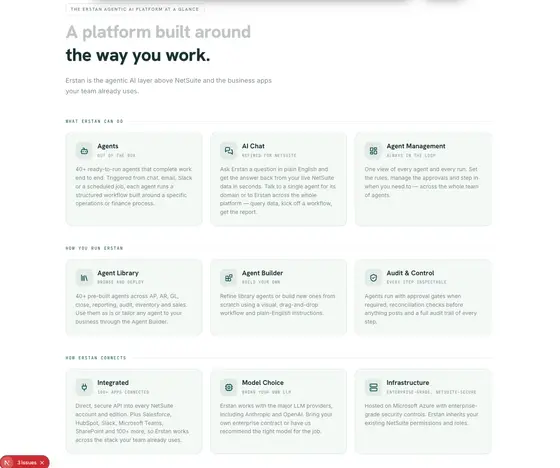
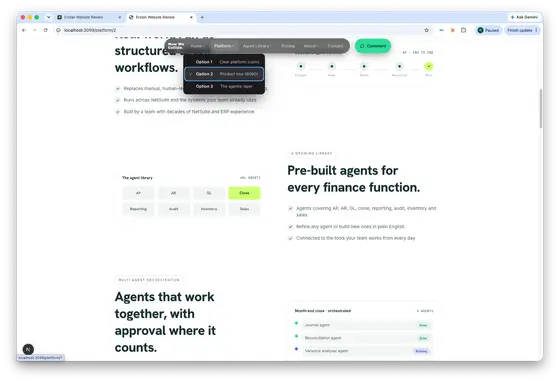
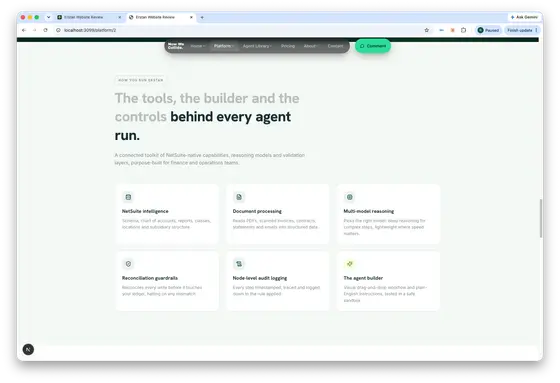
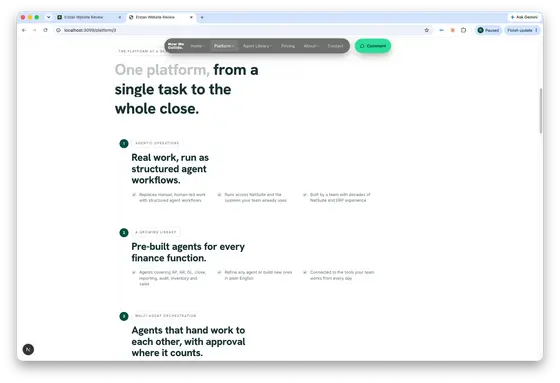
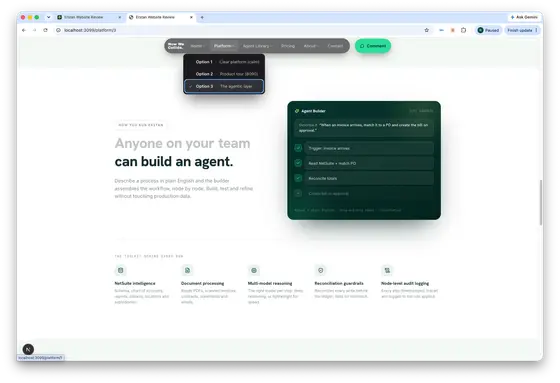
My own cut, before the client saw anything: three options down to two, so the review was a real decision and not a menu. Then their mark-up came back on it.
9 frames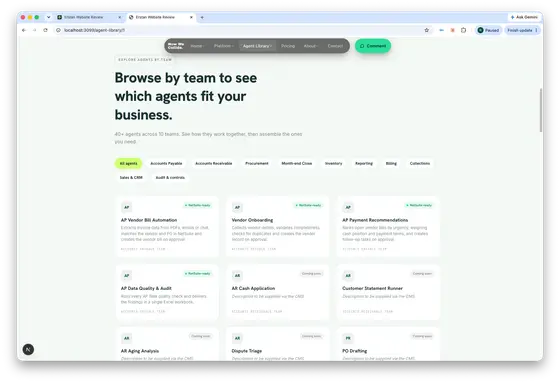
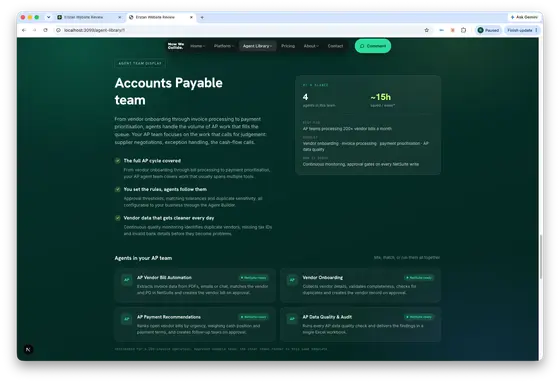
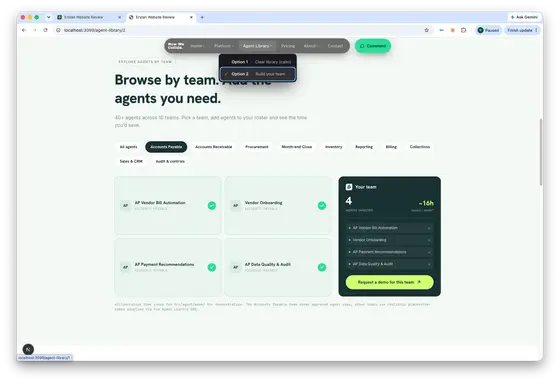
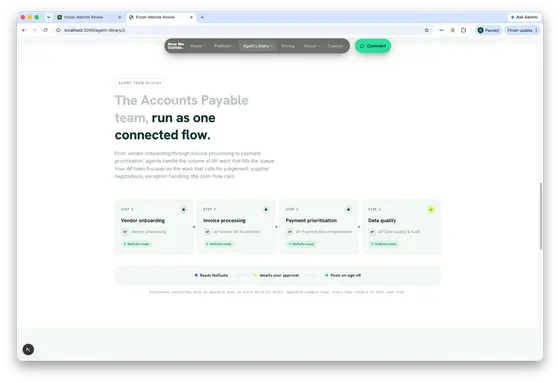
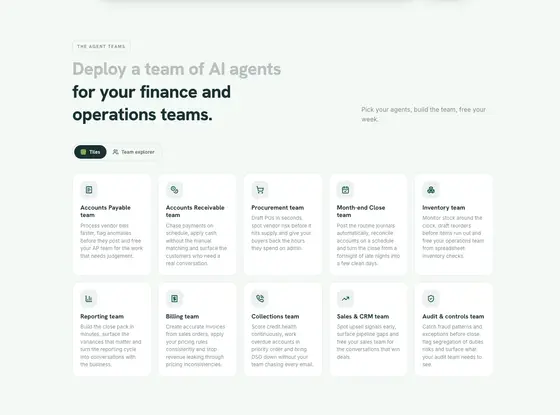
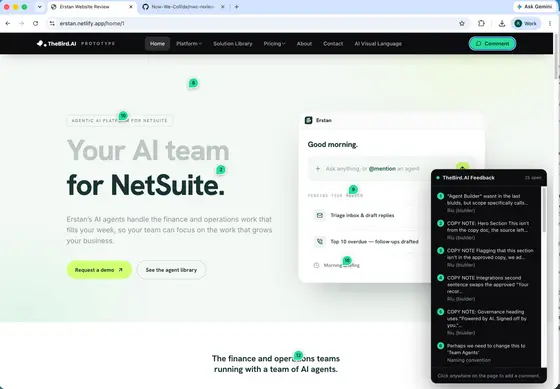
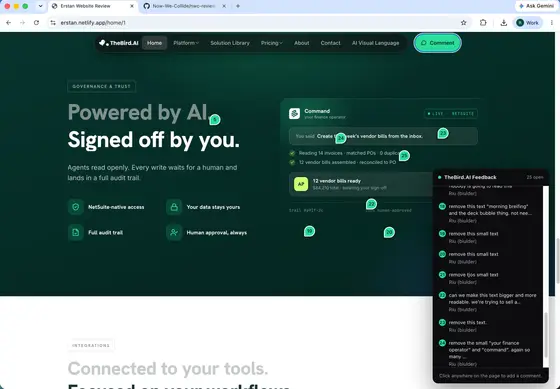
Six rounds of client feedback. The mass option build was never run again: from here it was refinement, and each round shipped as a new version with the old ones left standing so the client could see what changed.
17 frames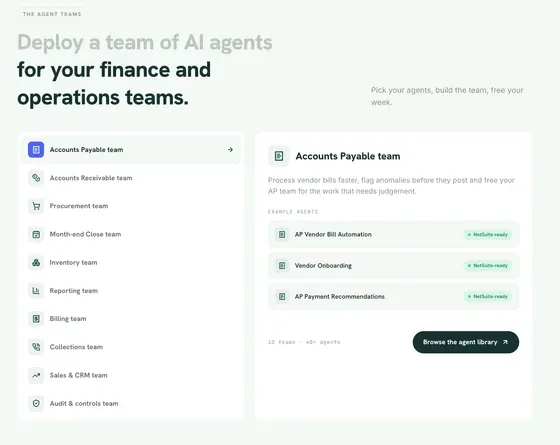
Building all 47 took less time than wireframing three would have. Choosing between them took the rest of the project.