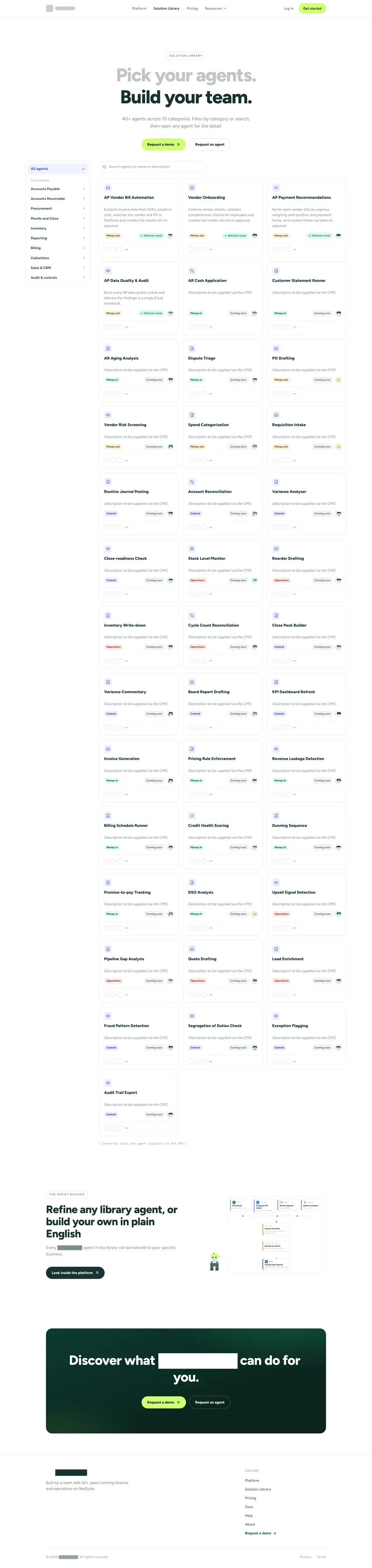
Solution libraryClick to focus
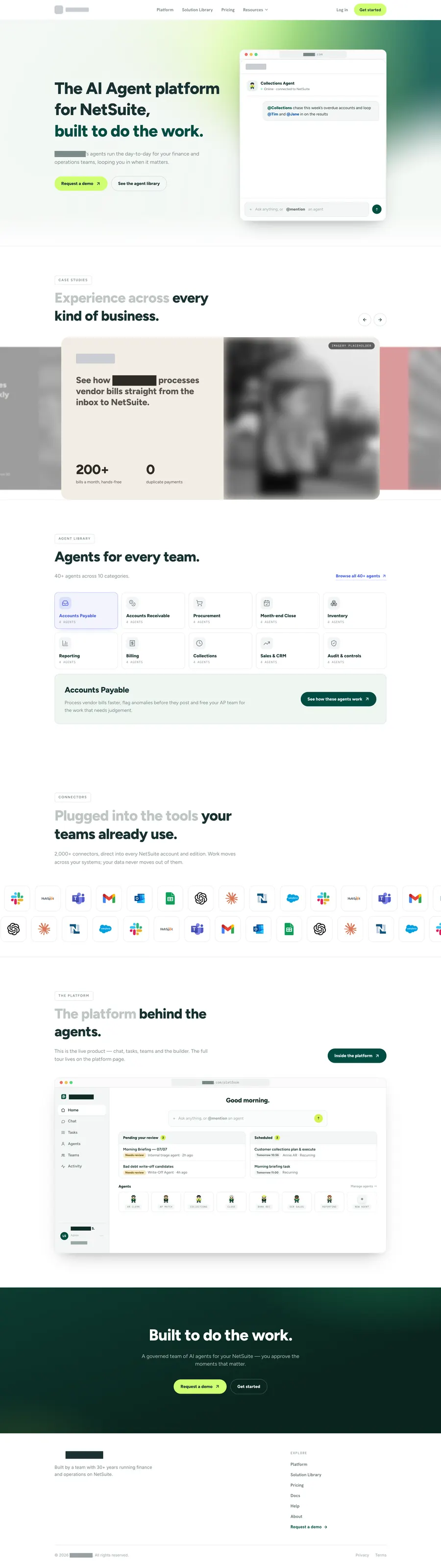
HomeScroll

PlatformClick to focus
The marketing site for an agentic AI platform for NetSuite. Six pages, six weeks, designed in code.
- Role
- Interaction design and build
- Studio
- Now We Collide / TheBird.AI
- Year
- 2026
- Client
- Unnamed until launch
How do you signal an AI agent?
Right now the industry’s answer is: don’t.
Every AI product has to solve the same problem. Something on screen has to tell you a machine did this. The default answer in 2026 is a soft rainbow gradient, and it is a deliberate choice, not a trend.
Google’s own designers write that Gemini’s solutions are meant to feel cool, calm and considered, by concealing the struggles and challenges of their creation
. Anthropic have conceded the same thing from the other direction, that slick design actively works against accurate mental models of what AI is
.
- 01
Reach forward
The gradient. Soft, magical, forgiving.
BorrowingMagic
- What it tells you
- An AI was involved
Gemini AI Visual DesignGoogle Design
- Aa02
Reach back
The serif renaissance across AI brands.
BorrowingHeritage, age, human hands
- What it tells you
- Nothing about the machine at all
- 03
Show the machine
8-bit.
BorrowingNothing. It admits what it is: a machine
- What it tells you
- Which agent this is
- What it is doing
- What state it is in
- Whether it needs you
All three answer the same trust problem. Two of them answer it by making the machine harder to see.
Where this one came from
The pixel direction wasn’t mine. My job was recognising it beat the system we’d already built, then making it survive contact with a real product: staking it to what the product actually differentiates on, hardening the rules so it stayed a signifier instead of drifting into decoration, and building it out to forty-plus agents.
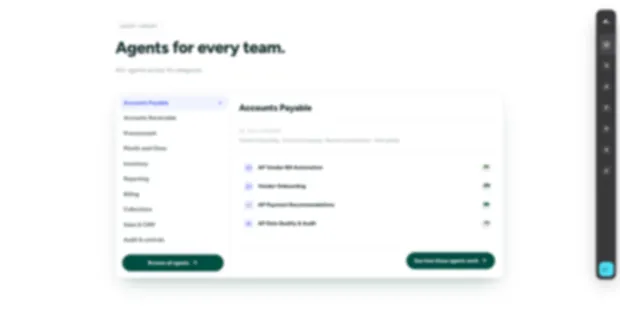
Accounts Payable
- AP Vendor Bill Automation
- Vendor Onboarding
- AP Payment Recommendations
- AP Data Quality & Audit
Accounts Receivable
- AR Cash Application
- Customer Statement Runner
- AR Aging Analysis
- Dispute Triage
Procurement
- PO Drafting
- Vendor Risk Screening
- Spend Categorisation
- Requisition Intake
Month-end Close
- Routine Journal Posting
- Account Reconciliation
- Variance Analyser
- Close-readiness Check
Inventory
- Stock Level Monitor
- Reorder Drafting
- Inventory Write-down
- Cycle Count Reconciliation
Reporting
- Close Pack Builder
- Variance Commentary
- Board Report Drafting
- KPI Dashboard Refresh
Billing
- Invoice Generation
- Pricing Rule Enforcement
- Revenue Leakage Detection
- Billing Schedule Runner
Collections
- Credit Health Scoring
- Dunning Sequence
- Promise-to-pay Tracking
- DSO Analysis
Sales & CRM
- Upsell Signal Detection
- Pipeline Gap Analysis
- Quote Drafting
- Lead Enrichment
Audit & Controls
- Fraud Pattern Detection
- Segregation of Duties Check
- Exception Flagging
- Audit Trail Export
The volume dial · one style, three sizes
- Full character56–64px · animatedHero moments, explainers, marketing.
- Vendor bills · MarchNeeds reviewSmall avatar20–40px · profile circleCards, lists, task ownership. Identity at a glance: who is doing this, and who has to sign it off.
- Micro chip16–20px · inlineMentions, dense tables, breadcrumbs. Pixel art survives at sizes illustration cannot.
The frame carries the state
- QueuedNothing to do yet
- WorkingRunning now
- Needs youStopped for a decision
- DoneFinished, nothing owed
Warm humans, cool agents
Nothing here was wireframed.
Every option the client saw was a real page, running, on a URL they could click.
Wireframes and mockups were a workaround for expensive code. A wireframe is a cheap stand-in for an expensive thing, and every argument for one comes back to build cost: don’t spend the expensive resource until you’ve agreed where to point it.
Code isn’t the expensive resource any more. So nothing on this project got drawn first. The options were built, compared as real pages, and cut down in front of the client.
The home page
8 optionsThe platform page
9 optionsThe agent library page
6 optionsWhat shipped
One home page Hero
Hero Platform
 Agent library
You can’t harvest a wireframe. You look at three and pick one. When all three are real pages you take the hero from one, a section from another, and an idea you only noticed because a wildcard existed and lost.
I automated the repetitive half.
Forty pages isn’t a flex if it cost forty builds.
- plugins
- agents
- skills
- human gates
So I did each of those once by hand, then wrote down what I’d just done. The process left the conversation and moved into files. Now it runs from one command.
It hasn’t launched yet, but it’s already moved from a set of website graphics into full product identity.